Bad Moon Rising
Mira Manga takes a walk on the wild side with Becky Annison, author of Werewolves of Britain a hair-raising new book for urban fantasy RPG Liminal.

Mira Manga takes a walk on the wild side with Becky Annison, author of Werewolves of Britain a hair-raising new book for urban fantasy RPG Liminal.
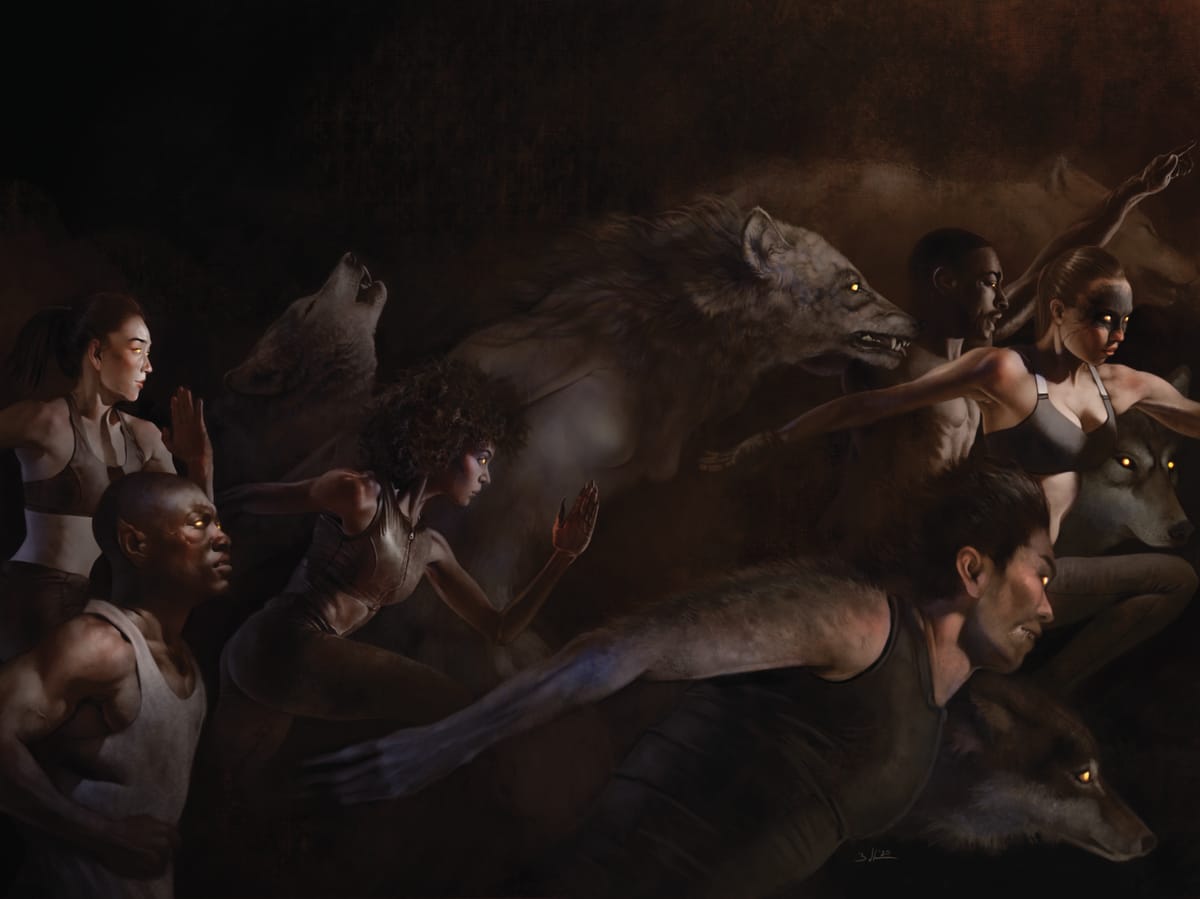
Werewolves of Britain is the latest supplement for Liminal, the urban fantasy RPG set in a United Kingdom where the veil between the magic and mundane worlds is paper thin and cabals of wizards, vampire families, faerie dynasties and more battle for supremacy in the shadows. It’s a setting that will feel familiar to anyone who has read the likes of Neil Gaiman’s Neverwhere or Ben Aaronovitch’s Rivers of London books and, coupled with its unfussy rules, has ensured that Liminal quickly established itself as a Wyrd Science favourite since its 2019 release.
Having taken us on a tour of the country’s capital with its first supplement, Pax Londinium, Liminal now invites us to stray off the path and get to know better the lycanthropic clans that haunt the highways and byways of Old Albion. Written by Becky Annison -game designer, werewolf expert, and one half of Black Armada Games- and evocatively illustrated by Jason Behnke, the book adds plenty of bloody meat to the setting and provides probably the most unique depiction of Sheffield yet committed to an RPG book to date.
Beginning life as a stretch goal to the original Liminal Kickstarter in 2018, the game's creator, Paul Mitchener, had tagged Annison in from the outset teasing Werewolves of Britain as a supplement covering ‘sexy werewolves’ whilst citing her award-winning games When the Dark is Gone and Lovecraftesque (the latter created alongside Josh Fox) and notably her then work in progress Bite Me!, a Powered by the Apocalypse game ‘of werewolf pack dynamics’ that was eventually released under the name Bite Marks. As we settle down to howl at the moon together, I ask Annison just how she came to be embroiled in the Liminal world.
‘When you compare UK gaming conventions to America and the thousands of people pouring through the halls at GenCon, we're a really small community, especially so in the indie RPG world,’ Annison explains. ‘I would say outside of London that Sheffield has the best roleplay conventions in the UK and they are all run by a team of interconnected friends and mostly at the Garrison Hotel. The connection with Paul came from those events and we had lots of mutual friends too. I was already writing Bite Marks and Paul had joined in my first ever play test of that. He knew early on that he wanted werewolves in Liminal and I received an email from him saying “I'm starting this game and I want you to join me!”’
Whilst Liminal does feature a roll call of supernatural terrors it tends to err more towards dark urban fantasy than outright horror unlike Annison’s previous titles Lovecraftesque, a storytelling game of brooding cosmic horror, and When The Dark Is Gone, where child adventurers process their trauma as adults. These are games that don’t fear to wander into darker territories, so I wonder is she naturally drawn to exploring theses dark places?
‘I suppose that anybody who knows me in real life, will tell you that I am one of the most relentlessly cheerful people you're ever going to meet and that's very true. I suppose it's very strange that all my RPGs are pretty much on the dark side of dark. There's a whole genre of light and cheerful, lovely games out there - I'm thinking of things like Wanderhome but it's never what I've been drawn to writing. I think there's something beautifully bonding about doing darker stuff with a group of friends you really like and I really get something out of that.’
In Werewolves of Britain that ‘doing darker stuff with a group of friends’ is realised through the Gangs that a player can choose to swear allegiance to. Equivalent to player characters’ Crews from the original Liminal rulebook these gangs include the likes of The Dogs of War, ex-armed forces members who thrive on discipline, The Lacemakers, a group very clearly based on 1980’s cocaine fueled Tory hedonists and the powerful and terrifying Jaeger Family.
In a setting filled with faerie lords and aristo magicians, werewolves are described as the ‘poor cousins of the hidden world’, outcasts and outsiders for whom the bonds of friendship from being part of a pack are crucial. These deeper social relationships and the associated wolf pack dynamics are core to the book and the way they are presented is meaningful, stirring and strongly represented throughout.
‘I love Kelly Armstrong’s werewolf novels,’ Annison enthuses. ‘In most modern werewolf fiction, pack dynamics are absolutely paramount. Her novels explore relationships between the people and the pack. Not just in terms of the normal relationships that we as humans, experience in a friendship and romance or parent and child, but overlaying and entwining that with wolf pack structures. I found that absolutely fascinating and thought nobody has written the game that I want to play, I was missing those mechanics that foregrounded the pack.’
‘There came a point where my problems with anxiety became apparent and the slightly less healthy mechanisms that I'd been using to cope stopped working so well,’ Annison continues. ‘At the same time I was reading werewolf fiction and was really resonating with the idea of having a group of people who you are magically connected to, a bunch of people who know when something's wrong and who've always got your back. Not only that but I began exploring the idea of a sense of transformation outside of your control.’
‘There are many different ways that you can interpret werewolf stories,’ she explains ‘but for me it was mental health. The analogy between an uncontrolled transformation into a wolf where not only is the transformation itself out of your control, but sometimes the way that you behave afterwards is out of your control too.’
‘I drew on my experience of the panic attacks and anxiety issues I have experienced for pretty much my whole life. It was very much this sense that not just was I having a panic attack, but also that my perception of the world could be so divorced from reality. That my perception of the world could be so utterly informed not by facts, but just my brain chemistry. That sort of thing was really powerful to me. Reading werewolf mythology where the werewolves are learning to live with their nature made sense. They're learning what they need to do. It's not something that there's a cure for but it's something that you learn the best way to live with.’
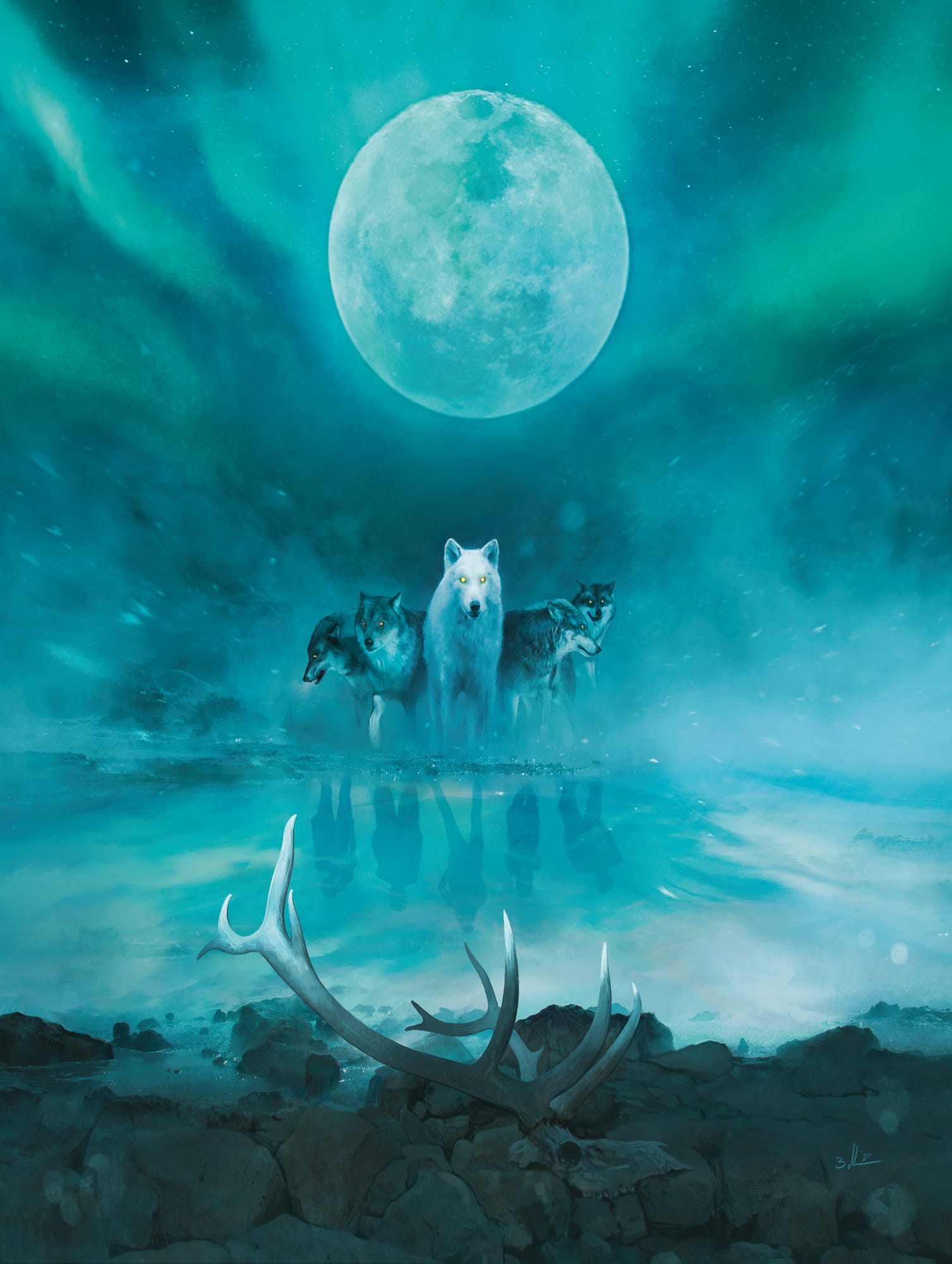
It’s a thoughtful take on the lycanthropic condition and throughout the book Annison brings a unique, indeed sympathetic, perspective to the subject, something that is also reflected by the book’s art. Throughout Werewolves of Britain, original Liminal artist Jason Behnke uses his considerable talents to echo the wild nature, freedom and torment of the werewolves in question. Notable characters from the setting stare back at you balefully, a pack surges across a double page spread wildly contorting as they experience the various stages of their transformation and scenes of explosive, violent fury sit alongside contemplative, still moments of beauty.
The collaboration between artist and writer came naturally, Behnke intuitively taking his inspiration from the text before transforming Annison’s words into the visceral, yet gorgeous images that grace so many pages. ‘He picked up my cues so well,’ she recalls. ‘Every time I saw an image it was just right. Another thing which I loved so much was where I had written NPCs that I was particularly keen to see portrayed, he'd independently picked those to create images of.’
Those NPCs are dashing, diverse and as delightful to read about as they are to look at. ‘What I wanted to do when writing the NPCs was to put it through a very British lens. As I was writing these meaty characters, I was thinking about people that I would meet and the sort of people that it would feel natural to encounter in the UK.’
As for which of the many characters that appear in the book is her favourite, Annison is hard pushed to choose. In the end though she settles for Major Chandra, the pack leader of werewolf gang The Dogs of War and someone inspired by the women she grew up around.
‘Parents of my friends at school who were these amazing take-no-shit women!’ she explains. ‘I have never known a woman exactly like Major Chandra, but I have known women who are like pieces of her. We have a very different history to the US with a very different ethnic makeup and I wanted to write in a much more diverse way, and show the diversity of the UK. I like Major Chandra so much, I could definitely see myself following someone like her!’
‘I drew a lot from British mythology too,’ Annison explains of the characters and creatures you’ll meet in the book such as The Black Shuck, a fabled British ghostly dog who makes an appearance alongside the slightly more infamous Hound of the Baskervilles. Even Sherwood Forest’s legendary outlaw Robin Hood gets a look in, appearing here in his guise as The Wolfshead.
‘I grew up watching Robin of Sherwood, Annison beams, referring to the cult 1980s British television show. ‘I loved that series and I knew that Paul Mitchener loved it too, so Robin of Sherwood was absolutely going to get in! If anybody hasn't seen it, you must go and watch it. It's so compelling, so brilliant. One of the reasons I love it is that it brings some slightly supernatural elements into the Robin Hood mythology. What’s critical is that they always referred to him in that show as The Wolfshead. That’s another term for outlaw and it ties in perfectly.’
Alongside these references to the country’s folklore Annison weaves in the actual history of the British Isles too. Liminal’s werewolf clans can trace their ancestral lines back to the Saxon invasions and by adapting real events she’s further developed both the setting and her werewolves place in it.
‘A lot of the events that I reference in Werewolves of Britain were historical events,’ she explains. ‘There was a purge of wolves in England. In 1281, Edward I ordered the extermination of all wolves in England. Years later, they had deliberately hunted them down to extinction, that's why there are no wolves here now.’
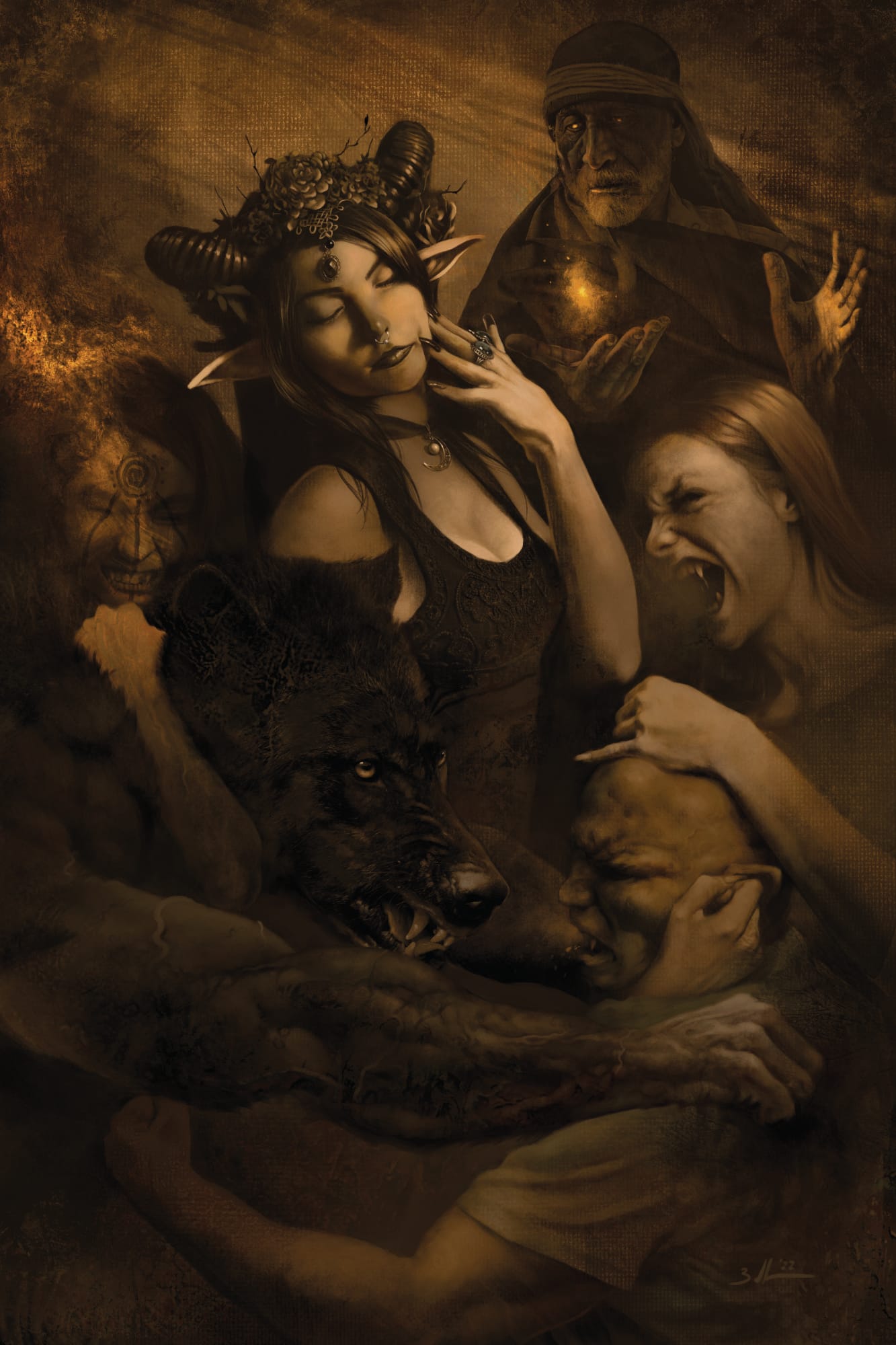
Liminal is not the kind of game that particularly feels the need to overburden itself with rules, but alongside its detailed histories and legends, Werewolves of Britain does introduce several new abilities and traits for lycanthropic player characters.
‘I wanted to include add ons that didn't massively over-balance the game, but which still gave a lot of options to make it feel more wolfy,’ and Annison explains how werewolf PCs can benefit from things such as heightened senses when on the hunt, the ability to partially change just one part of their body into that of an animal and rapid healing.
‘These are creatures who are really, really hard. If they ever got properly organised then they should be absolutely terrifying. The only reason that they're not is because they are in these little gangs, always having their own wars. The other organisations of Liminal are very invested in making sure the werewolves are never organised and never become a power base challenge.’
We began by discussing the Sheffield indie RPG scene and end by discussing how Sheffield, City of Furnace and Steel, features as the book’s main location.
‘I think it's a shame that when people want to make things feel British, they just throw in the Houses of Parliament or similar. Whether it's a TV show or a book or a movie or whatever, it's like, now we're gonna pan to London. Oh, look!’ Annison laughs.
‘Some of the outlying parts of Britain are incredibly rich in folklore and have a real character of their own. I wanted to tell a story of a group of people who had had their power deliberately stripped away, were being deliberately kept from organising - so there are some parallels with the working class in the story that I wanted to tell and Sheffield is a really famous working class city.’
‘It was a kind of perfect place to kind of tell the tale of the werewolves,’ she concludes. ‘If you are going to have the werewolves in any city in the UK, then it would have to be Sheffield. It’s a stone's throw from the edge of the city to the Peak District National Park. So if you want a space to run around and howl at the moon you have that, and then can just return to the city!’
Werewolves of Britain is available from Modiphius
Find Becky Annison online at Bluesky or at blackarmada.com