The Naked & The Dread
John Power Jr. speaks to Chris McDowall about his new apocalyptic skirmish game The Doomed

John Power Jr. speaks to Chris McDowall about his new apocalyptic skirmish game The Doomed
‘It was the lockdown, the first lockdown in the UK in 2020. It was my birthday and somebody had sent me a gift card and I thought, you know what, I’m stuck in this house, I need an indoor hobby. I’m going to buy myself two different miniature kits and bash them together, buy a few paints to paint them with and just do it for a bit of fun, not get in too deep,’ Chris McDowall laughs.
‘And then it was, I'm just gonna buy a little bit of terrain so that I can pose them on it for a nice photo. And then I thought, well maybe I'll try making a little ruleset that I could use with them. And well, here we are three years later.’
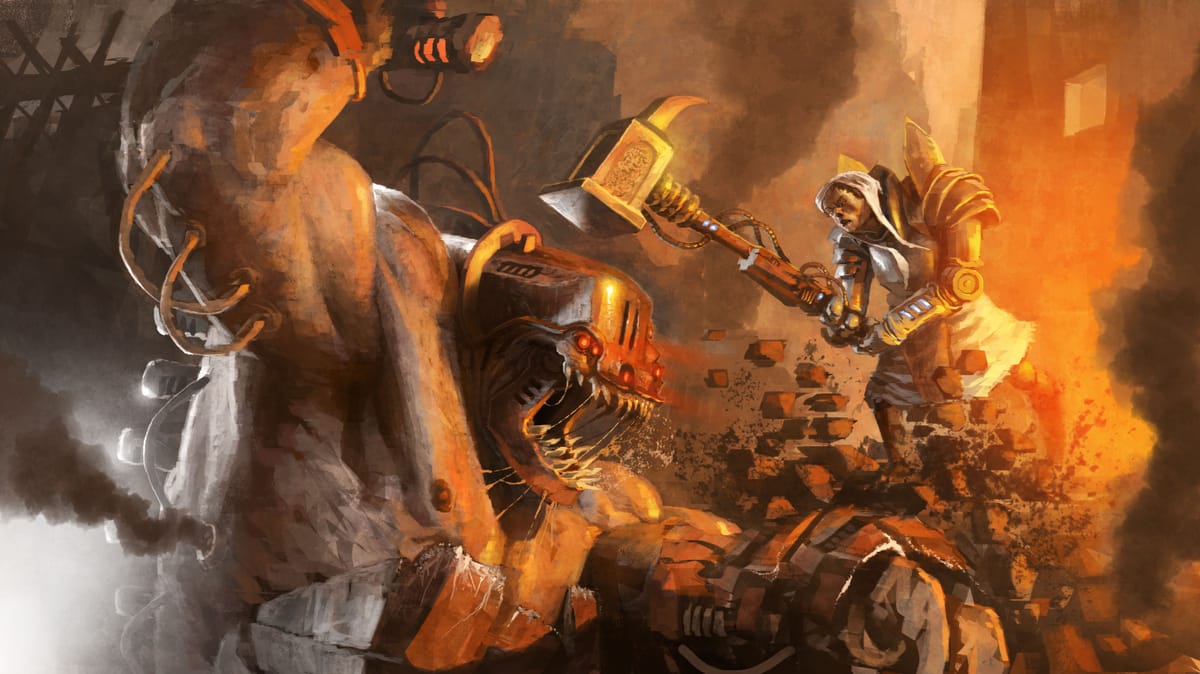
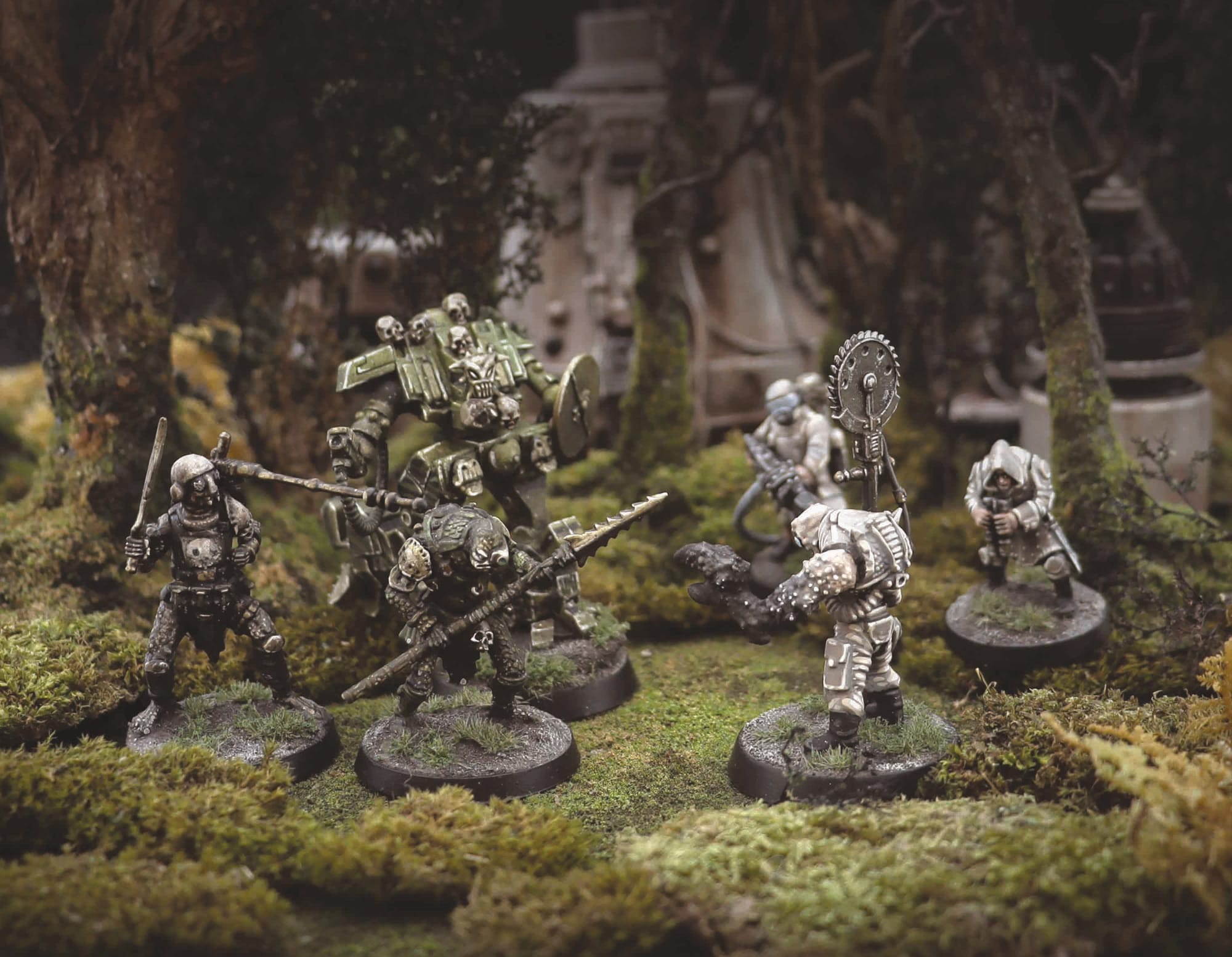
Where we are exactly is late summer 2023 and Chris McDowall has just released The Doomed. A miniature agnostic wargame set on a dying, dystopian world, The Doomed sees rival warbands exploring this ruined planet, fighting battles both amongst themselves and against the monstrous techno abominations that call this awful planet home.
Whilst McDowall is best known for games like Into The Odd, one of the more influential rules-lite RPGs to have emerged from the OSR movement, The Doomed is something of a return to his roots and the wargames, like Warhammer and Necromunda, that first caught his imagination as a ten year old child setting him on the path to game design.
McDowall may have, temporarily at least, swapped RPGs’ theatre of the mind for the more physical world of miniatures butThe Doomed still shares much of the same design philosophy that underpinned Into The Odd and its follow-up Electric Bastionland. Much like they took those early editions of Dungeons & Dragons B/X and stripped them to the bone, The Doomed is a similar exercise in mechanical minimalism.
Warbands come from one of four different factions, each with their own theme and from which you pick eight models, a leader and their attendant retinue. Each model gets to operate independently of each other and can make three actions on their turn, actions that are normally limited to moving, fighting hand to hand, shooting or recovering if they’re currently prone. Tape measures are out, with models able to move and shoot as far as they can in a straight line and to further simplify things units have just the one stat, Quality, which they must equal or roll over on a d6 when they want to do anything bar make their first move.
‘With The Doomed, what we ended up with was an attempt to create as simple a rule set as possible, something that is very fast and easy to learn,’ McDowall explains. ‘Now I appreciate that's something that every wargame system says about itself, but I've tried to push it even further here and take it to the extreme. I’d been playing Kill Team a little bit and I thought, well, this is okay, I like this, but I wonder how much more you can strip back. Another big inspiration for that was the One Page Rules games. But even with those I thought, well, can you go even further than that? Can you strip out things like ongoing conditions, stacking modifiers and measuring. Reduce units down to a single single number essentially, without losing flavor or the differentiation between units?’
Reducing the rules to a skeletal frame wasn’t just an intellectual exercise though. By making the core structure of the game as simple as possible McDowall was able to then add complex features back into the game where they could create the kind of narrative drama that he wanted, a key example of this being the Shock Table that units must roll on every time they’re wounded.
‘I wanted the game to have that sense of chaos, a little bit like in Warhammer Fantasy Role-Play when you get these critical hit results that cause all sorts of spiraling effects that can change the face of the battle,’ he says. ‘So every time a unit gets wounded, you roll on a shock table. That covers things like getting a chance to crawl to cover before you go down or the unit that's been hit just panics and shoots at the nearest model.
‘That can create all sorts of domino moments where an attack hits somebody and they go down but they get an attack so they shoot another person who then crawls and moves and that activates something else. In a game where the core system was a little bit complicated that, for me, would be overwhelming. I wanted the system to be super simple so you could have those exciting dramatic moments, and have this chaos unfolding on the battlefield.’
For McDowall that element of chaos is a huge part of the appeal, the way a roll of the dice and a table of weird results can spark unexpected moments of joy and create stories at the table.
‘I think it's the idea of playing to find out what happens,’ he says, ‘Whilst I can't claim ownership of it, that’s actually a phrase that I use in this book, and it’s a phrase that's used a lot in RPGs. So you set up a battle and you bring your miniatures and someone else brings theirs and you never know what the weird thing is that’s going to happen that at the end of this game we're all gonna laugh about and remember.
‘I'm not really into sports, but that’s probably something that people who enjoy watching it get as well, waiting for those big moments. That's what’s always stuck with me from when I was learning to play wargames as a kid. I got loads of the rules wrong but I still remember those unexpected moments I had playing with friends and it’s those moments that come out of the dice that appeals to me.’
Helping create those moments the game includes 36 Conflicts, designed to maximise the narrative potential. These range from straight forward firefights, to missions where you must recover powerful relics or rescue survivors of a previous encounter, all with their own optional twists, specific rewards and additional rules for playing them solo. Furthermore these scenarios can be strung together to create a campaign, one that may see your warband escape from this cursed planet, or as likely see the planet pull itself apart at the seams.
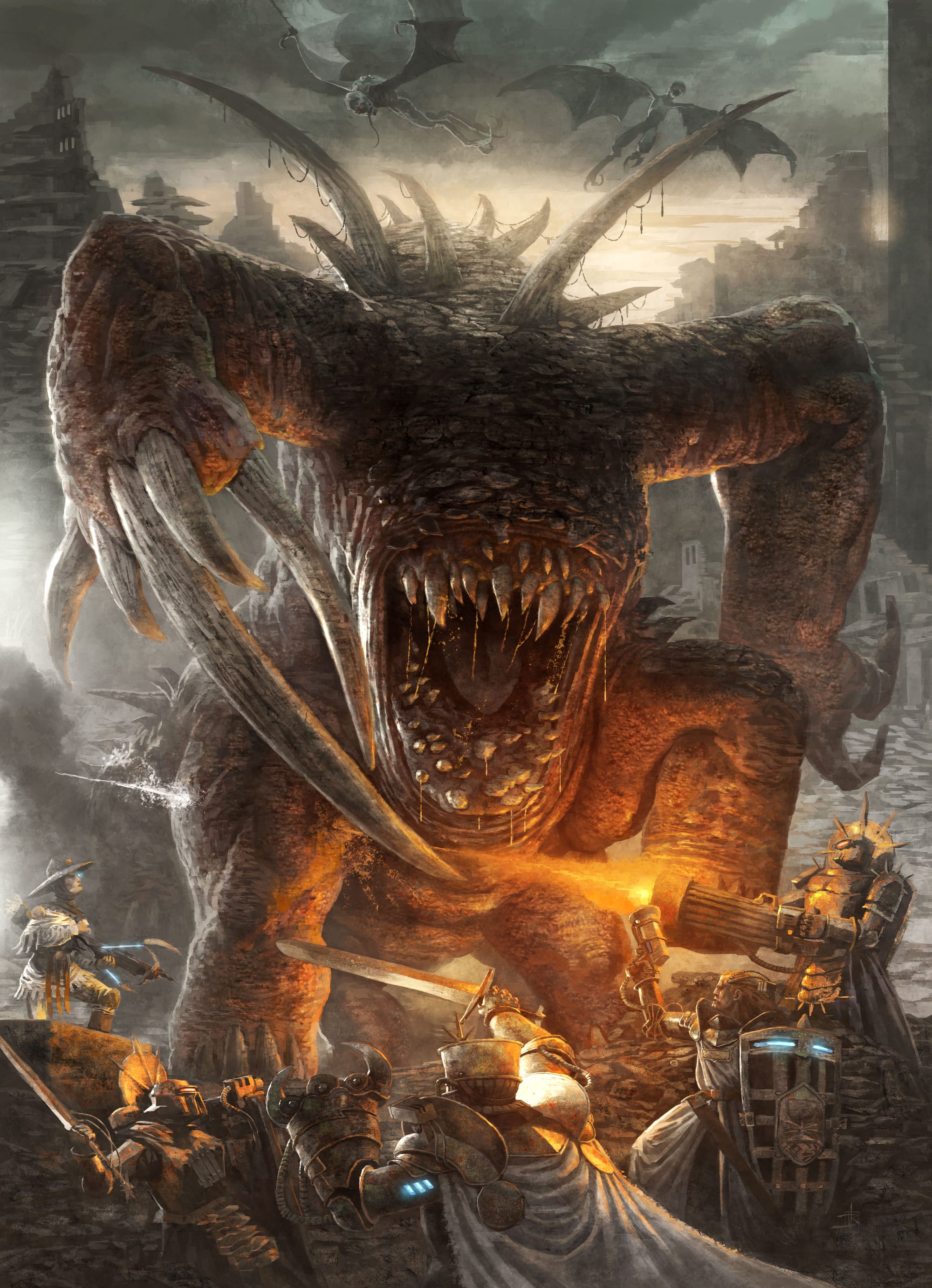
Where McDowall has also allowed himself to put some extra heft into the rules is with The Horrors, the apex predators of The Doomed’s already hellish world. These are creatures that, when not killing each other, players must hunt down and destroy to both complete scenarios and upgrade their equipment. Taking down a Horror though is rarely an easy task, and it is achieving that which gives the game so much of its unique flavour.
‘Each game can be focused on one of these Horrors, almost like a boss monster for the scenario, each of them breaks the rules in their own way and behaves in a slightly differently,’ says McDowall. ‘I wanted the rest of the rules to be very simple so that we could make the Horrors really weird and each one feels like you're playing a slightly different version of the game.’
The Doomed includes 36 of these Horrors. Some like the Abyssal Colossus, ‘a bio-mechanical monstrosity dredged from the forgotten depths,’ come with attendant minions to do their bloody work for them whilst others, such as the Flesh Titan, require no assistance in crushing all before them single handedly. All though are unique in both their murderous abilities and the different tactics to put them back into the cursed earth that spawned them. Generally this is achieved in the game by destroying three Nexuses, points of geomantic power that must be removed before the Horror itself can be defeated but which all have their own game changing effects too. The Horrors add another level to the game and it was their inclusion that made McDowall realise he was on to something with The Doomed.
‘It did originally start as a more straightforward skirmish game,’ he explains. ‘But then I had some scenarios that included these wandering monsters, a little bit like you get in Frostgrave. The more I played with them though they felt really fun to have, and some of the bigger ones had a presence on the table that really changed how the scenario felt. So that's when the focus shifted to “well, what if the Horror was the scenario?” And that's the point where I thought that this is its own thing now, not just me doing my version of One Page Rules Firefights or Kill Team.’
Whilst the Horrors can appear as part of the setup in some of the standard Conflicts, they can all be played as standalone scenarios and their sheer power and brutality adds another dimension to The Doomed, the potential for rival warbands to, temporarily at least, put aside their differences to try and take down a particularly dangerous foe together.
McDowall suggests though that once you’ve got a few games under your belt you try to combine a Conflict with a Horror, where you might need to team up to take on the game’s Horror before turning on each other to complete your other objectives. It adds an entirely new tactical layer to the game as you must decide how much to commit yourself to the attack, and hopefully get the reward for finishing off the Horror, without leaving yourself to weakened to resist the inevitable betrayal.
‘When you have both a Horror and a Conflict, it gets into this slightly weird scenario,’ he explains. ‘If we're playing together we both want to kill the horror and we probably know that if we fight each other too much, the Horror is just going to pick off the scraps from both of us. But we are also competing over another objective. So it does create this weird gray area where it’s both cooperative and competitive.’
It’s easy to see how these kind of games can produce the kind of chaotic moments and emergent storytelling that McDowall enjoys so much. On the other hand with some of the game’s looser rules, the element of unexpected events that may change the shape of any given battle, and the emphasis in the rulebook on players making judgement calls and coming to a shared consensus when things aren’t 100% clear, it’s not hard to imagine how many wargame players, used to more rigid rulesets might react.
‘It's been interesting,’ McDowall says. ‘The people I've played with who I know through RPGs, for them it doesn't seem like a big deal at all. In an RPG, you're always having to come to a consensus on something. There's a whole school of RPG thought “rulings, not rules”, which is where at some point there'll be something that isn't covered by the rules and the GM will have to make a ruling about it.
‘With the people I played who came from a more wargaming background, some really got to grips with it quickly but I have a very, very good friend who is like the opposite of me and when wargaming he's very competitive and he likes the rules to be very thorough and for him it was completely different to anything he played before, so I think I think for some people it is going to be a bit of a shock.’
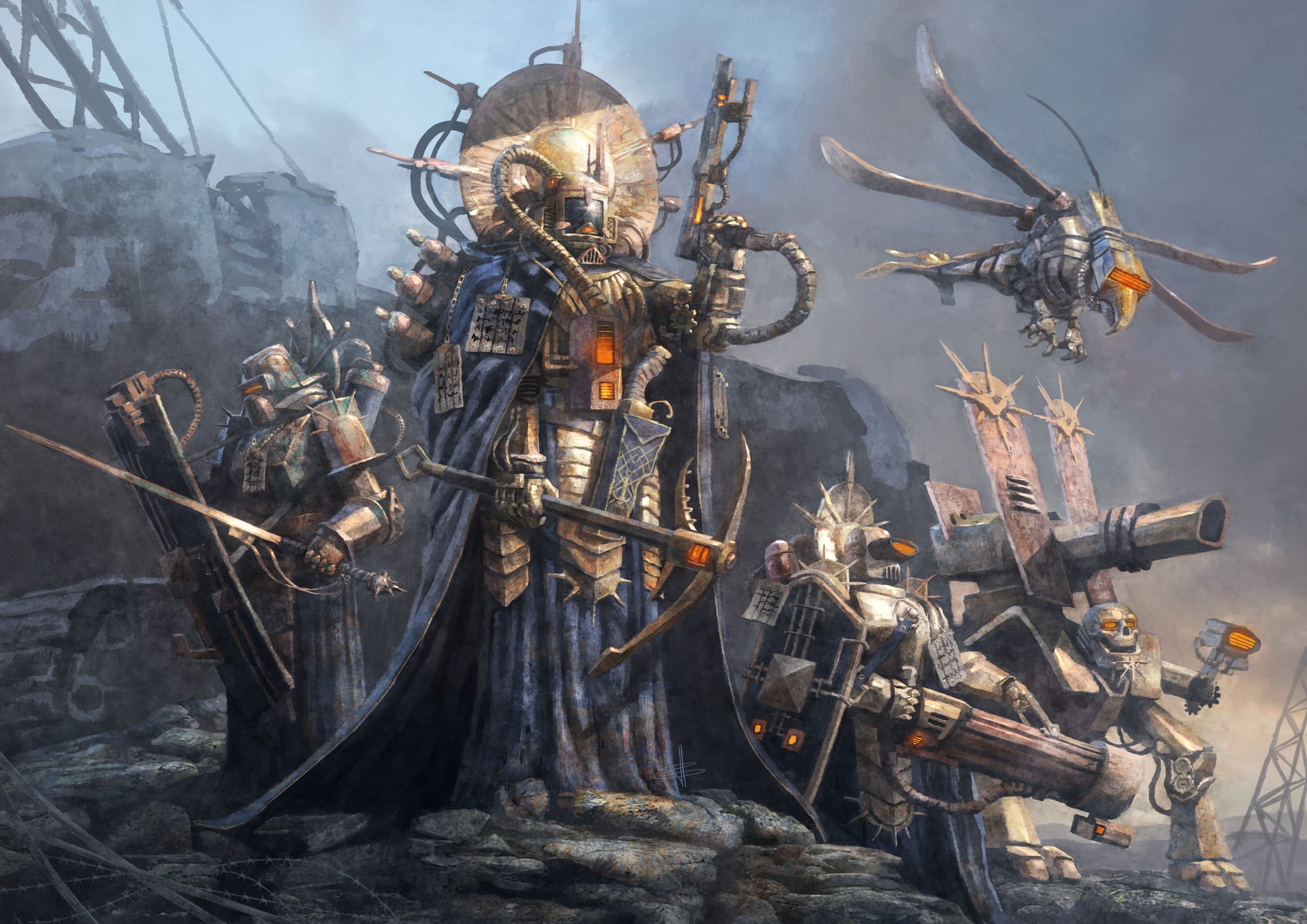
The Doomed also shares DNA with McDowall’s previous RPGs is in its sparse approach to world building. Instead of several hundred pages detailing the history of the planet and how everyone and thing ended up there, The Doomed doles out its setting in bite size pieces scattered throughout the book. Enough to give you a sense of the place but still open to numerous interpretations.
‘I always want the setting to serve the game,’ he says. ‘I don't often go into a project thinking, “Oh, I've got this incredible world that I need to bring to life through the medium of a game,” rather “I want this game to have a setting and I want it to be interesting and evocative and exciting.” But it needs to fit the game, those settings always excite me more than when you play a game and it feels like the designer also had a novel in the back of their head. So with The Doomed, it is mostly delivered through single lines of flavour text.
‘I very, very casually played Magic - The Gathering when I was a teenager and what I used to love about that was I didn't know anything about the world because I would go into my local shop and they had these big buckets of common cards for like a penny per card. I would just go through and pick out the ones that looked cool, and they would just have the little lines of flavour text. So I felt like I was piecing together this setting through those and it didn't all fit together, but I engage with that much more than having a big paragraph of text. So that's what I've tried to do here, provide a little teaser and give enough that it feels coherent but you also have to fill in the blanks yourself a bit.’
Just as The Doomed has inherited elements from McDowall’s previous games, the experience of immersing himself wargames again has also fed back in to how he’s been looking at RPGs. ‘I think something that I've come back to, something that I've always really enjoyed from wargames -like Necromunda and Gorkamorka and if we're counting something like Warhammer Quest- they all had this thing where the campaign was quite rigidly structured. You play a scenario and then there's a whole after-battle sequence where you're in town, or you've got random events happening or your characters are leveling up, and you've got this kind of sequence laid out. With roleplaying games, I've always shied away from that kind of structure but I think there is something appealing in that, keeping things slightly firmer with how a session is structured.
‘Then one wargame that's really been inspiring me lately is Five Parsecs from Home, it has a really strong element where there's a load of tables you roll on first, you do a very quick battle and then there's a load of tables you roll on afterwards and it creates this story. I've always liked those kind of almost procedurally generated stories that you can get from certain games. So that's one of the things that I've really taken away from wargames, how random tables can almost create the session for you. That's not new, there are lots of RPGs that do that but I think I think there's some wargames that are doing it in a really good way at the minute.’
Having scratched his wargame itch, for now at least, with The Doomed McDowall is heading back to the world of RPGs with Mythic Bastionland. As the name suggests this is a return to the world of Into The Odd and Electric Bastionland, though where they saw you explore ‘the only city that matters’ in its industrial and modern eras, here you find yourself in its legendary past.
‘It uses largely the same system as Into The Odd and Electric Bastionland,’ McDowall says, ‘With those I didn't really get to explore much of what you might think of as traditional fantasy as it's a very modern setting. But I thought what would be their creation myth? So this game is set within that world, which sounds fancy, but essentially means it's a medieval setting and a game about knights going on quests. What I really wanted to do with it is put the focus on traveling through the wilderness, engaging with these myths but with a more zoomed out scope of play. Pendragon was a huge influence obviously, but with a focus on a hex-crawl style of play.’
McDowall’s been developing Mythic Bastionland in public for the past couple of years, an approach he’s taken for most of his career. ‘I think it's the only way that I know how to do it,’ he says. ‘When I started making games I wasn't doing it as a living just as a bit of a hobby. So I was putting them on my blog and saying “I've been working on this, here’s the first version of it” and I've never really stopped doing that. The good thing is you get you get a wide variety of feedback. Some useful, some less so, but you get to see how it's doing in the wild.
‘Also people seem to quite like it, seeing behind the curtain. Even though it's going to end up as quite a nice looking hardback book, it starts with just a document you cobbled together and they can see the steps that it takes to get to the end. Really it's the only way I know but it seems to work well for me.’
Something else that Electric Bastionland was notable for is The Oddendum. Rather than the usual assortment of ignorable rules stuffed in an appendix ,The Oddendum was featured solid advice from McDowall explaining how he played the game, and providing some insight into his views on roleplaying in general.
In Mythic Bastionland that has become The Oddpocrypha, and provides some of the clearest examples of play we’ve seen in an RPG. Each page features a brief script from a game, illustrating a specific concept, from learning the rules to player death, alongside a running commentary from McDowall pointing out what the referee and players did right, or wrong, or just his general beliefs on the subject at hand. It’s packed full of useful insights and worth the price of admission alone.
‘Sometimes I think games provide an example of play almost because they feel duty bound to and then they keep it very focused on the rules,’ he explains. ‘What I really wanted to do was focus on situations that you don't often see. So a really obvious one is it's very rare to see a character die in an example of play.
‘Mythic Bastionland isn't a super lethal game, characters aren’t dying left, right and centre but it will happen at some point and very few games equip the group to deal with that. Which is why you see all these stories about players whose character dies and the GM doesn't really know what to do. So they either fudge it and say, “Oh, no, they're fine” or it causes an argument.
‘So I wanted to have an example where a character that we know from the other examples of play, that you’re maybe a bit attached to, dies. And it explains what do we do now with this character and this player, how does the group actually deal with that? It's one thing to say in the rules, “oh, roll up a new character and get them in as quickly as possible” but it's another to actually deal with that in practice.
‘I always try to make it clear that this is just how I would do it. Some games will say, “Oh, it's all different for every group.” But that's almost useless advice, because it's just saying work it out. Then some games will be really dogmatic about it and say “this is the way that this game needs to be run to work”. So I try to strike a middle ground and just say “this is how I do it.” With my games having some common design ideas running through them I'm hoping by now people will know whether they align with that or not.’
Looking at the success of Mythic Bastionland’s Kickstarter - as we go to print it’s already raised around 1000% of its goal with over 3 weeks to go- it seems that plenty of people do indeed align with how McDowall does it.
Hopefully though it wont be too long before he is back tinkering with miniatures and skirmish games again. RPGs grew out of wargames and despite going in different directions ever since there’s still a lot that designers from both camps can stand to learn from each other. Though hopefully in future we can try and do it without all the lockdowns.
The Doomed is out now available from Osprey Games
This feature originally appeared in Wyrd Science Vol.1, Issue 5 (Dec '23)